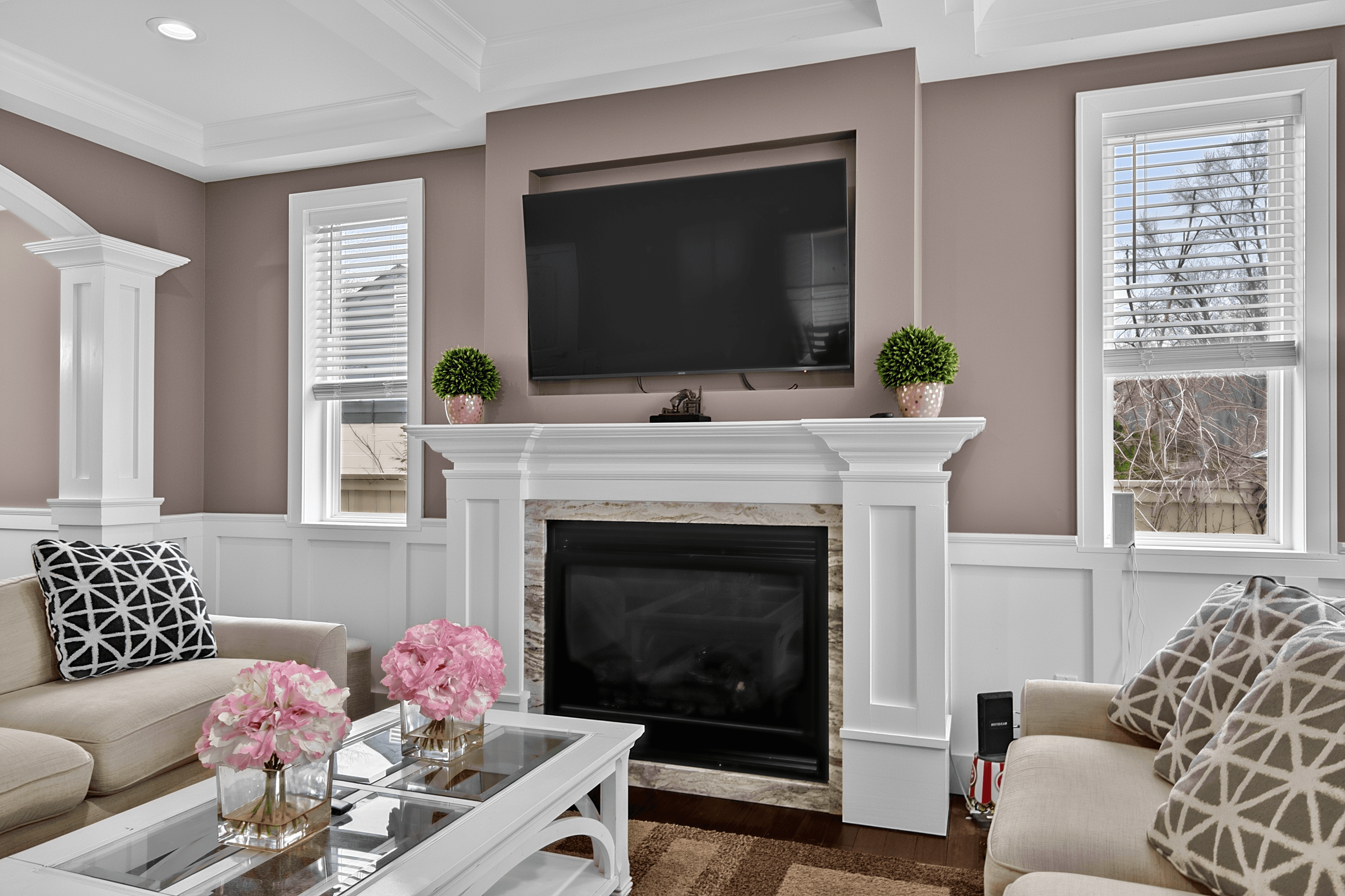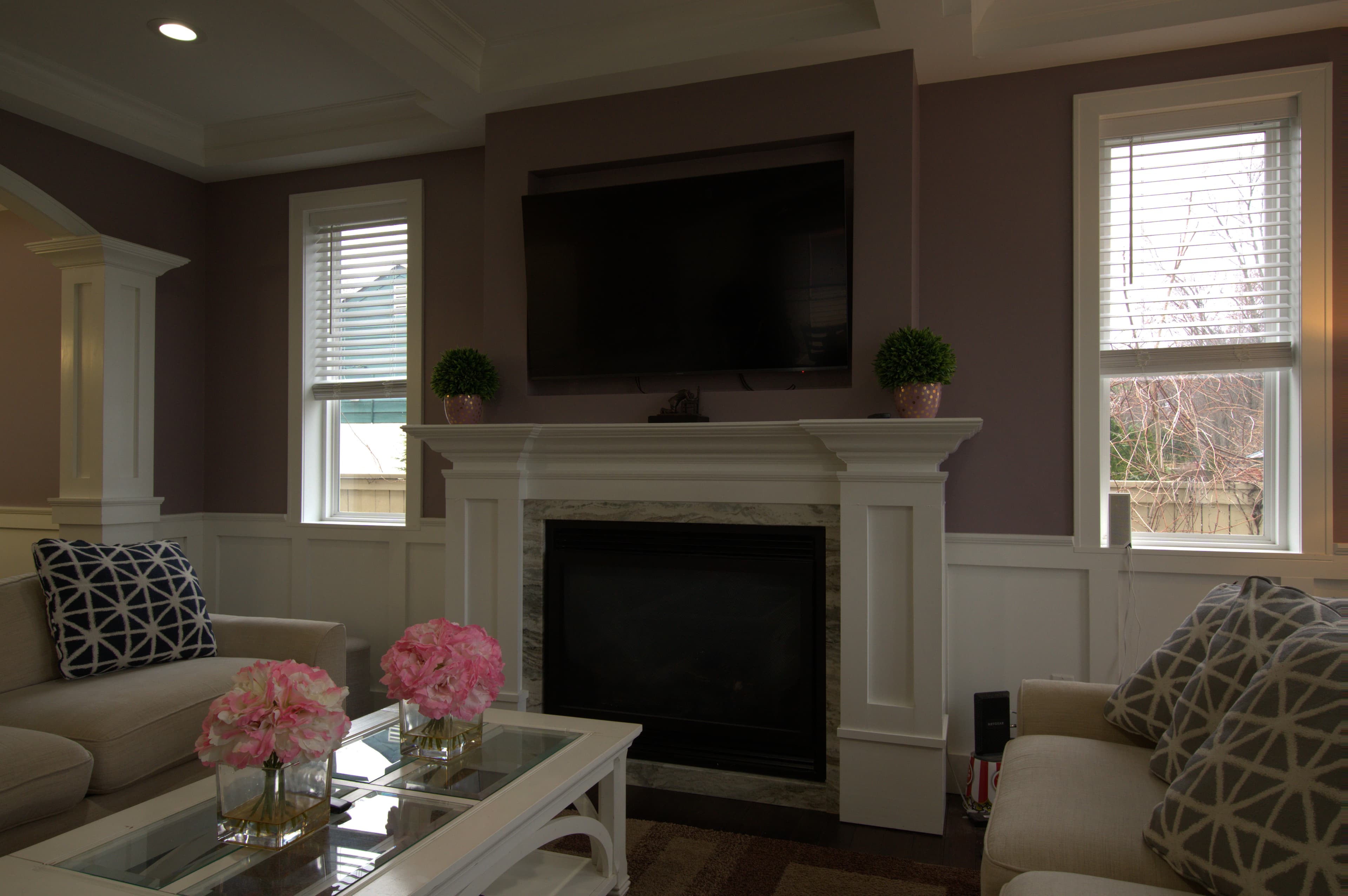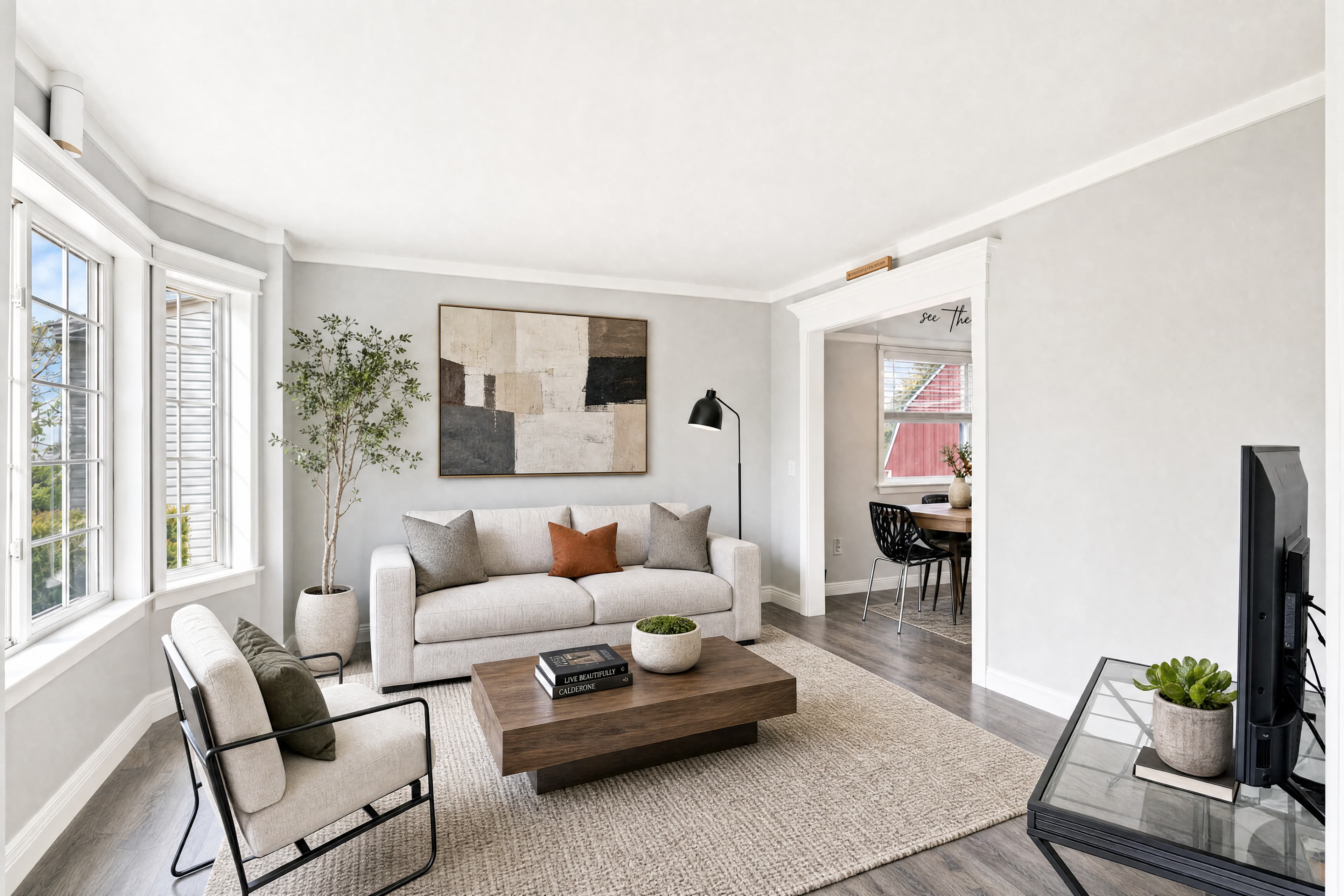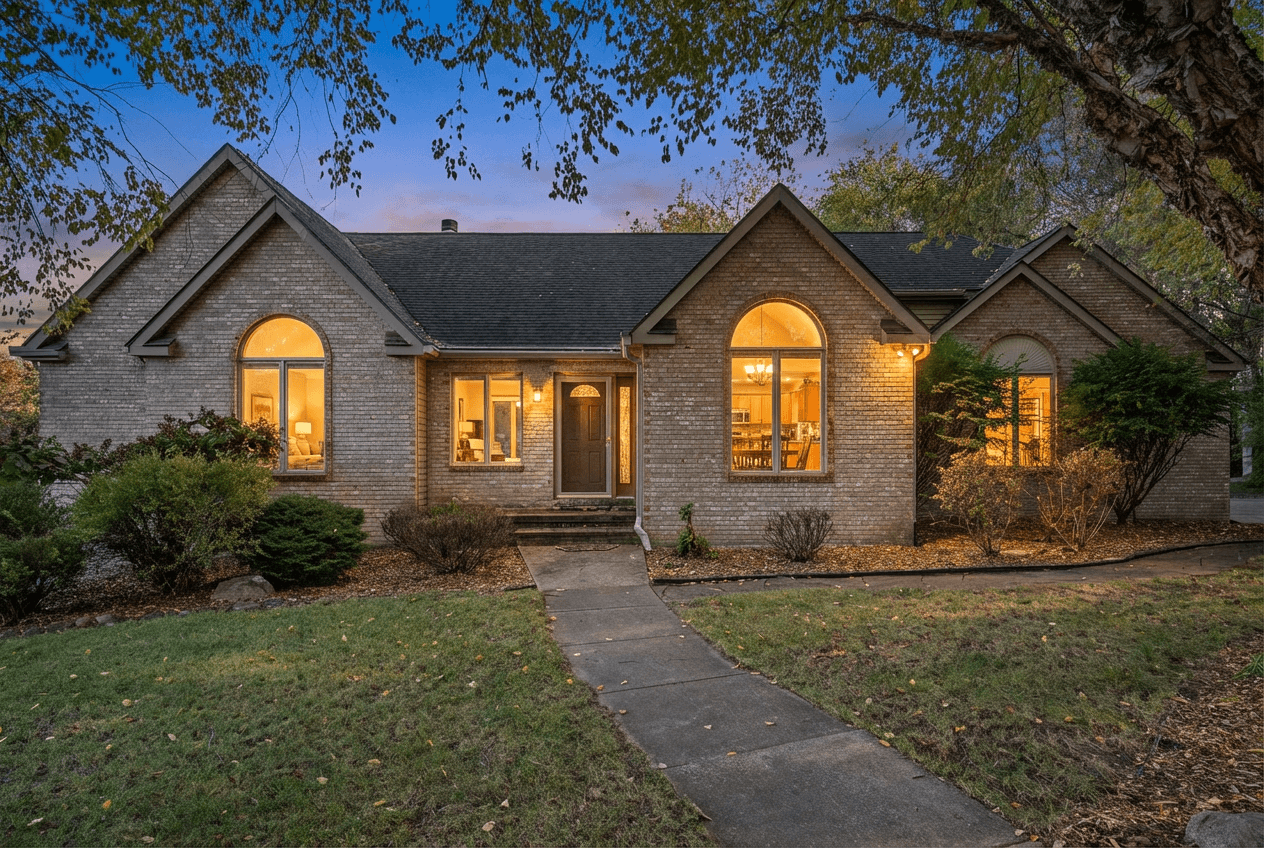
Virtual twilight is one of the highest-ROI services in real-estate photography. A single twilight exterior in a listing’s photo set can be the difference between a property that sits and one that sells. Here’s how it works, when to use it, and how to make sure the result reads as a real twilight, not a fake.
What is virtual twilight?
Virtual twilight is a photo editing technique where a daytime exterior is digitally transformed to look as if it was taken at dusk, blue hour, or golden hour. The daytime sky is replaced with a twilight atmosphere, window interiors get a warm glowing light, and landscape elements are enhanced to match the evening ambiance.
The result is indistinguishable from a real twilight photograph — but it was taken in the middle of the afternoon.
Why twilight photos sell properties faster
Twilight listing photos consistently outperform daytime-only photos:
- Higher click-through rates from MLS search results — twilight photos stand out in a grid of flat daytime shots
- Increased perceived value — twilight signals premium listing
- Stronger emotional response — warm glowing windows create a “home” feeling buyers respond to viscerally
- Better social-media engagement when agents post listing previews
Why this matters
Real twilight vs. virtual twilight
Real twilight
A real twilight shoot requires returning to the property at “magic hour” — approximately 20–45 minutes after sunset. The window is narrow, weather-dependent, and requires additional scheduling with the seller, agent, and photographer. A real twilight shoot can add $150–$300 to the photography invoice, plus the time cost of a second trip.
Virtual twilight
Virtual twilight is produced from your existing daytime photos — no return trip, no weather dependency, no scheduling headaches. Our AI pipeline:
- Replaces the daytime sky with a dramatic blue-hour or golden-hour atmosphere
- Adds warm interior glow to windows (simulating lights on inside)
- Removes harsh midday shadows surgically
- Warms the lawn and adjusts ambient lighting to match dusk
At $2.49 per image, virtual twilight costs a fraction of a return trip and delivers in under 30 minutes.
The five twilight preset moods
Every preset transforms the same midday source differently. Pick by listing tier and exterior style:
- Warm Sunset — golden + amber sky, the most versatile preset for residential listings
- Deep Blue — cobalt blue hour, premium and dramatic, ideal for modern architecture
- Luxury Twilight — premium magenta-into-violet, magazine-cover energy for high-end listings
- Bright Marketing — punchy and vivid, optimized for MLS thumbnail click-through
- Light Subtle — soft natural dusk, the most realistic, ideal when you want it to read as a real twilight
How to shoot daytime photos for virtual twilight
Not all daytime exteriors convert equally well. Getting the best result starts with the source photo.
Late afternoon is ideal — but not required
Photos taken in the late afternoon have softer, warmer light that transitions naturally into a twilight look. But overcast or midday shots work too — the AI replaces the sky and adjusts the lighting regardless of original conditions.
Expose for the structure, not the sky
Since the sky will be replaced entirely, the daytime exterior should be exposed to show the house correctly. A slightly underexposed sky is fine — it’s being removed anyway. What matters is the facade, landscaping, and foreground are properly exposed.
Turn on interior lights when possible
Even in a daytime exterior shot, having interior lights on improves the window-glow effect. Warm light visible through windows gives the AI more to work with when simulating “lit from inside”.
Use a wide, clean composition
Front-facing or 3/4 angle compositions of the full facade work best. Remove vehicles, hoses, or clutter from the driveway before shooting — object removal can handle it if needed, but clean originals produce the best results.
Aerial and drone twilights
Drone shots are particularly striking as virtual twilights. An elevated angle showing the full property against a dramatic twilight sky creates a hero shot that instantly communicates the scope and premium quality of the listing. Our AI handles aerial perspectives just as well as ground-level shots — the sky replacement and exterior glow work at any camera angle or altitude.
Drone virtual twilight also dodges the FAA lighting requirements for actual drone operations after civil twilight. A drone shot taken in the afternoon with full legal visibility can be transformed into a virtual twilight aerial that would be impractical to capture as a real aerial twilight.
The technical process — how the AI pipeline actually works
Stage 1: Sky segmentation + replacement
The AI identifies and masks the sky with high-precision semantic segmentation. This handles complex architectural silhouettes — rooflines with multiple pitches and dormers, chimneys, TV antennas, tree canopy overhanging the roofline — with edge accuracy that would take a manual retoucher 30–60 minutes to achieve. The daytime sky is replaced with a twilight atmosphere: deep blue gradient from horizon to zenith, soft cloud structures lit from below as they would be during the transition from day to night.
Stage 2: Shadow removal
Midday shadows have hard edges and a high contrast that doesn’t exist at twilight. The AI surgically removes cast shadows from the building, lawn, and driveway before applying the twilight transform — without this, the converted image reads as obviously midday-shot.
Stage 3: Window glow simulation
At twilight, interior lights become visible and warm through windows in a way that fundamentally transforms how a home reads emotionally. The AI identifies window areas and adds the amber-yellow glow of interior lighting visible through glass — varying based on window size, recess depth, curtains, and proximity to other windows.
Stage 4: Ambient light + ground reflections
Twilight lighting is fundamentally different from daytime: lower overall level, cooler ambient light from the sky, warm artificial exterior lighting becoming dominant. The AI adjusts ambient light quality across the entire scene, including how surfaces (driveway, pathway, grass) reflect the new sky.
Pricing: what you pay vs. what you charge
At $2.49 per image from Better Listing Media, virtual twilight is one of the highest-margin services in a real-estate photography business. A real twilight shoot costs you 60–90 minutes of additional time plus scheduling overhead. A return trip is also weather-dependent — if it clouds over at dusk, the shoot fails.
Most real-estate photographers charge $75–$200 per listing for a virtual twilight add-on. At $2.49 per image and a typical delivery of 1–2 twilight images per listing, the margin per listing is substantial.
For package structure, virtual twilight is most commonly offered as:
- A standalone add-on to any listing package at a flat per-image rate
- Included in a premium or luxury listing package as a differentiator
- An upsell offered at delivery when the agent receives the standard photos
The upsell-at-delivery approach is particularly effective. When an agent receives daytime photos looking great, the natural next step is to offer one premium twilight version of the best exterior shot. The agent has already seen your quality, they’re in a positive mindset about the listing, and the incremental cost is small relative to the commission.
Virtual twilight for luxury real estate
Twilight has been a standard feature of luxury real-estate marketing for years — premium listings above $1M almost universally include a twilight exterior. Virtual twilight makes this presentation accessible to mid-market and entry-luxury listings that wouldn’t justify the cost and logistics of a real twilight return shoot.
For true luxury listings where the marketing budget supports premium photography, virtual twilight can supplement real twilight rather than replace it. Real twilight shots capture authentic magic-hour atmosphere. Virtual twilight from different daytime exteriors completes the set with the same mood. Best of both: authentic for hero shots, consistent virtual coverage for secondary exteriors.
Common mistakes to avoid
Submitting photos with heavy processing already applied
Virtual twilight works best on photos that are unprocessed or lightly processed. If you’ve already applied heavy tone curves, aggressive HDR, or artistic presets, the AI has less to work with and the twilight conversion can look artificial. Submit the cleanest version available.
Strong midday sun angles
Photos shot in harsh midday sun with strong vertical shadows are harder to convert convincingly because the shadow direction and quality are inconsistent with twilight. Late afternoon (3–6 pm) shots produce the most natural results.
Expecting window glow on a windowless wall
The window glow effect that makes virtual twilight compelling requires visible windows in the facade. Side elevations with no window exposure produce minimal glow. Front-facing and 3/4 compositions with primary window groupings produce the most impactful results.
Ordering twilight for interior photos
Virtual twilight is for exteriors. Interiors don’t contain sky and the window glow effect is only meaningful viewed from outside. For interiors, consider HDR Merge or Virtual Staging instead.
FAQ
How long does virtual twilight take?
Under 30 minutes for most orders. Complex scenes with detailed architectural silhouettes may take slightly longer, but the 30-minute window covers the vast majority of residential exteriors.
Can I specify the twilight look?
Yes. You can select one of the five preset moods (Warm Sunset, Deep Blue, Luxury, Bright Marketing, Light Subtle) at upload. If you don’t specify, the AI selects the most visually compelling preset for the property and composition.
What if the result doesn’t look right?
Every job ships with email support. Reply to the delivery email with notes about what should change — sky color, window glow intensity, specific area issues — and we’ll reprocess on standard plans, no charge.
Is virtual twilight detectable as edited?
When done correctly, no. The AI produces photorealistic results consistent with what a real twilight photograph of the same property would look like. MLS rules require photos not be misleading about the property’s condition or features, but sky replacement and lighting enhancement are universally accepted post-processing techniques — equivalent to color correction or HDR.