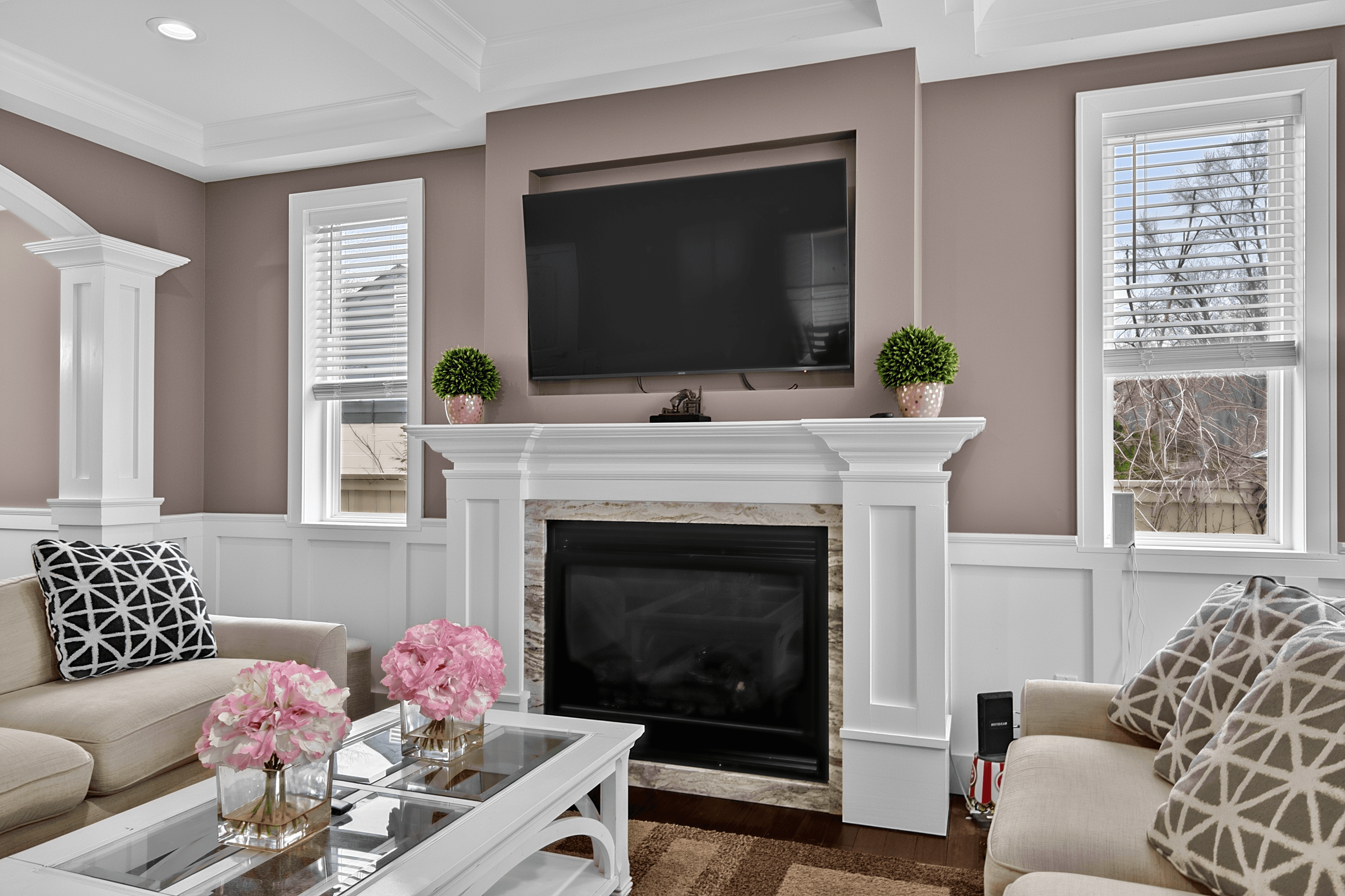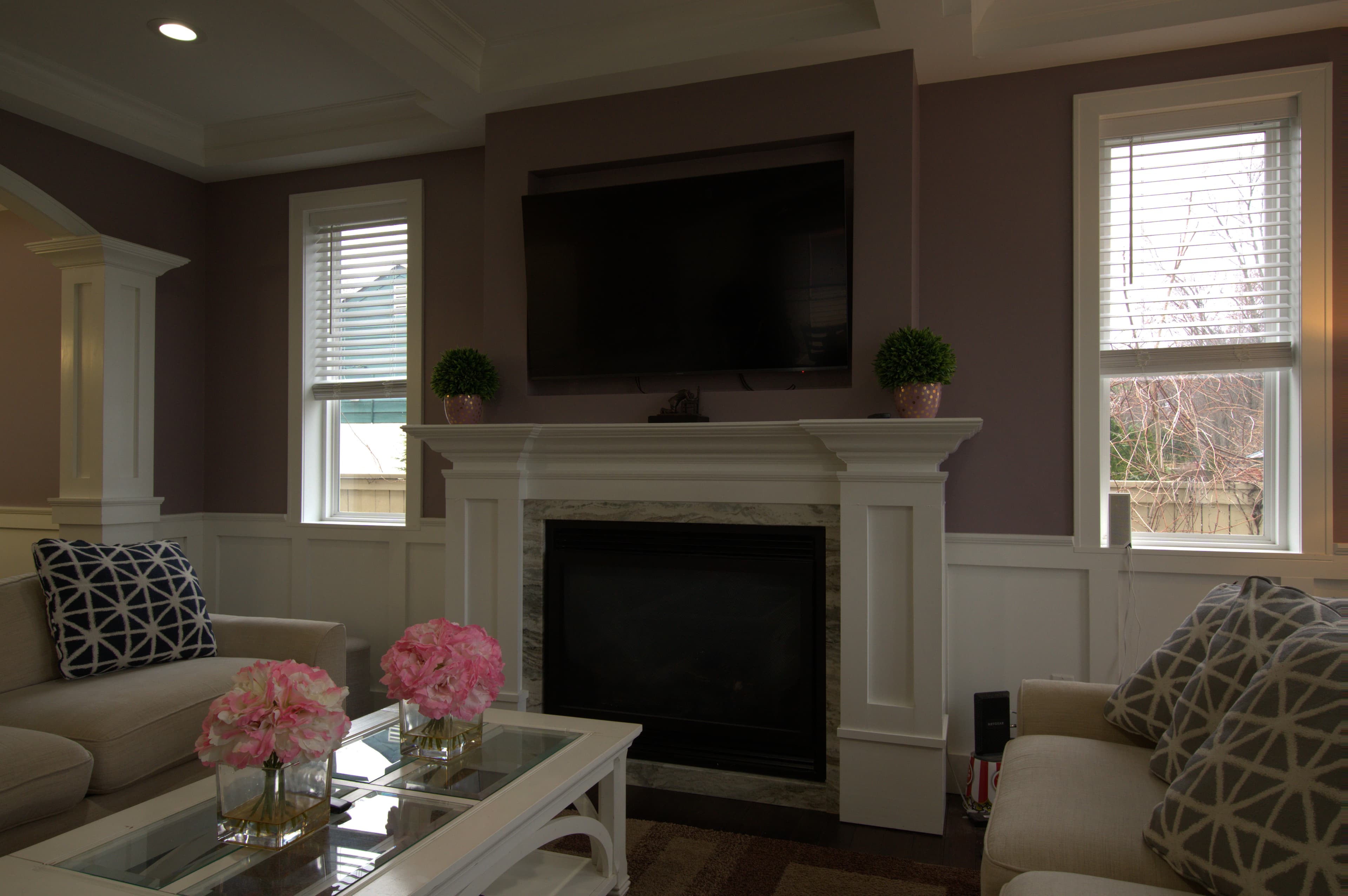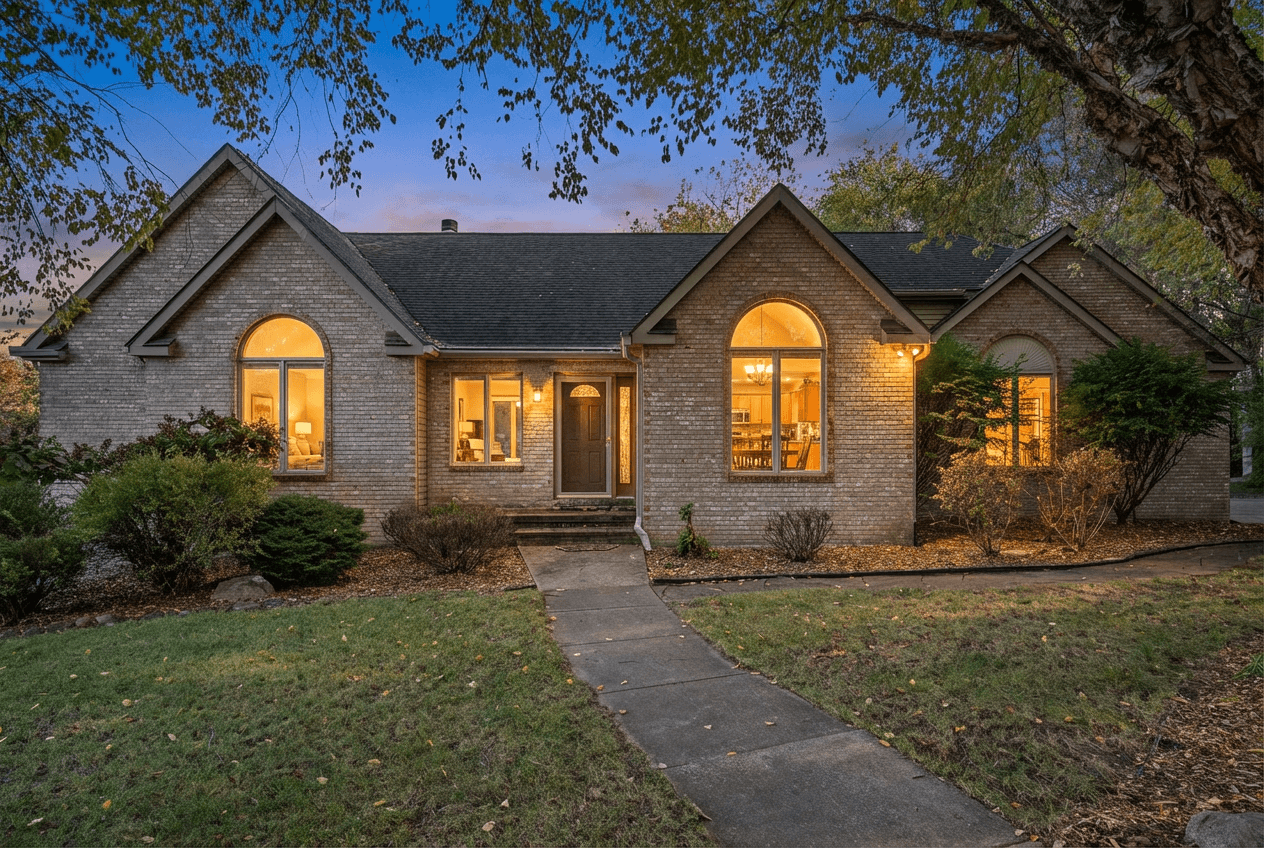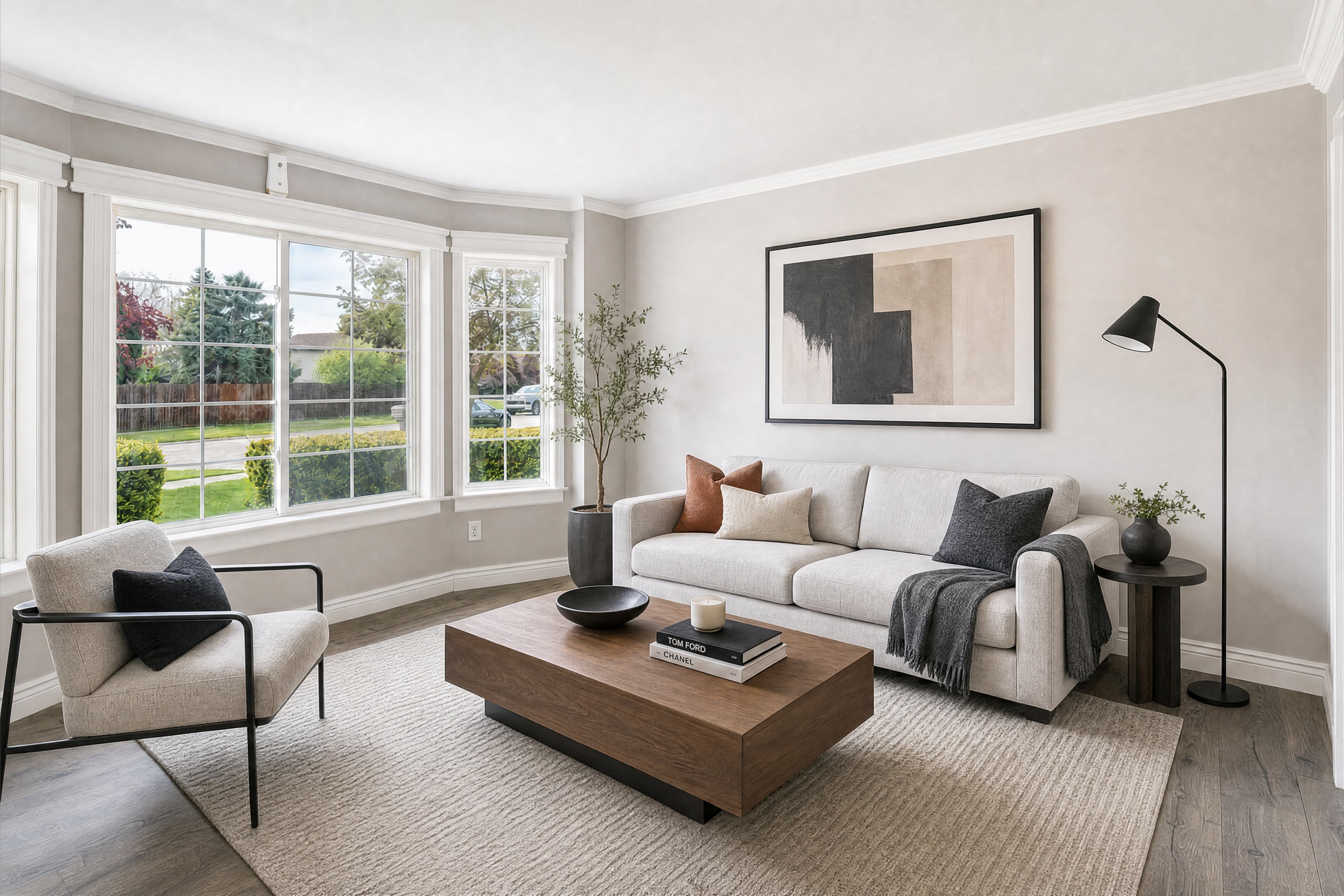
Buyers don’t buy empty rooms. They buy lived-in spaces. Virtual staging is the highest-leverage edit in real-estate photography — small per-photo cost, measurable per-listing lift.
The empty-room problem
The average buyer spends 2–4 seconds on each listing photo. In that window they have to form an emotional connection with the space — picture themselves living there, raising their family, hosting holidays. Empty rooms make this almost impossible. Buyers default to negative assumptions: “Is the room awkward? Is it small? Does my furniture fit?”
Studies of MLS performance consistently show staged listings outperform vacant listings on:
- Click-through rate from MLS search results: 30%+ higher for staged
- Showing requests per online view: ~20% higher for staged
- Days on market: staged listings sell 30–50% faster on average
- Sale price relative to list: staged listings achieve 1–5% higher sale-to-list ratios
Physical staging: the old math
Traditional physical staging is expensive. For a 2,500 sq ft home:
- Initial consult + design fee: $300–$600
- Furniture rental: $2,000–$4,000 per month
- Delivery + installation: $400–$800
- Removal at close: $400–$800
- Total for a 60-day listing: $4,000–$8,000
And you pay this whether the listing sells or not. If the property sits for 90 days, the stager bills another month. If the listing goes pending and then falls through, you reset the meter.
Virtual staging: the new math
At $3.49 per image, virtual staging is per-image and reversible:
- Stage one room (5 angles): ~$17
- Stage 5 rooms (5 angles each, 25 images): ~$87
- Stage the entire home (10 rooms × 5 angles, 50 images): ~$175
For a typical 2,500 sq ft listing, comprehensive virtual staging costs under $200 versus $4,000+ for physical. A 95% cost reduction with comparable visual impact for online listing presentation.
The lift math
When virtual staging beats physical
Vacant properties
Vacant listings are the perfect use case. The home is genuinely empty, the photos look empty, and virtual staging fills them without the cost and timeline of physical furniture rental.
Pre-list photography for occupied homes
For currently-occupied homes where the seller’s actual furniture is dated or doesn’t match the buyer demographic, virtual staging lets you photograph the rooms empty (or with cleared furniture) and present them in a style matched to the target buyer.
Multiple style options
You can virtually stage the same room in Modern, Coastal, Farmhouse, and Transitional styles — same listing, four hero shots. Physical staging locks you into one style choice.
Re-listing refresh
If a listing has been on the market a while, virtually re-staging in a different style refreshes the listing photos and signals an updated presentation to buyers checking back.
When physical staging is still worth it
Virtual staging isn’t universal. Physical staging still wins when:
- Open houses — buyers walking through expect to see actual furniture in actual rooms
- Luxury listings $2M+ where the marketing budget supports comprehensive staging and buyers expect a fully presented home in-person
- Awkward room layouts where the value-add of staging is showing buyers HOW the room can be used — easier to demonstrate in person than in photos
Staging strategy by listing tier
Entry-level listings ($150K–$400K)
Virtual staging only. Stage 2–4 hero rooms (living, primary bedroom, kitchen if applicable). Skip secondary bedrooms unless the listing is vacant. Total spend: $30–$60.
Mid-market listings ($400K–$1M)
Virtual staging for all photographed rooms. Stage every angle a buyer would judge. Total spend: $80–$150. The lift on a 1% sale-price improvement covers the staging cost 50x over.
Luxury listings ($1M+)
Hybrid: physical staging for the home, virtual staging for marketing materials and additional angles not covered by the physical stager. Use virtual to present the home in alternative styles for diverse buyer pools.
The multi-perspective challenge — and why it matters
Single-perspective staging is easy. Multi-perspective is hard. If you stage three photos of the same living room and each photo has a different couch, your listing’s photos break the buyer’s mental continuity. They wonder if they’re looking at the same house.
Most early virtual-staging services produced inconsistent furniture across angles. Each photo was staged independently and the AI picked different furniture each time. Our multi-perspective service solves this — the same sofa, in the same position, appears in every photo of the room.
FAQ
Do MLS rules allow virtual staging?
Yes, but it must be disclosed in the listing description and the photos must be clearly labeled. Standard practice: include “Virtually staged” in the photo caption for staged images. We deliver staged images at full resolution alongside the empty originals so you have both sets for compliance.
Can buyers tell virtual staging from real?
Modern AI virtual staging is photographically realistic. Furniture has correct shadows, materials, and scale. The walls, floors, windows, and architectural elements are preserved exactly — only the empty space gets filled with furniture.
How many rooms should I stage per listing?
The high-impact rooms: living room, primary bedroom, dining room. For larger budgets, add the kitchen island area (bar stools), home office, and secondary bedrooms. Don’t stage utility rooms, garages, or bathrooms.
How fast is delivery?
Under 30 minutes from payment to download for most jobs. Multi-perspective sets take slightly longer (15–30 min) because the AI needs to reconcile furniture identity across angles.